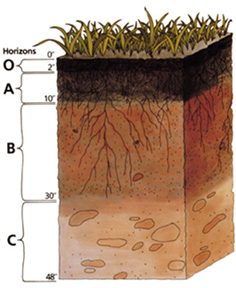
No-till management and cover cropping are distinct practices that deliver compounding benefits when used together. No-till reduces soil disturbance, preserving the physical structure, microbial communities, and fungal networks that take years to establish. Cover crops maintain living roots in the soil through periods when cash crops are absent, feeding those communities and protecting the surface from erosion and moisture loss. In Canadian growing conditions — with short seasons, late spring frosts, and extended winters — the scheduling of cover crops requires regional adaptation that generic advice rarely captures.
Why No-Till Matters for Soil Structure
The aggregates that give healthy soil its characteristic crumbly, porous structure are held together by fungal hyphae, bacterial biofilms, and compounds secreted by plant roots. A single pass with a rototiller at 15 cm depth disrupts these physical connections across the entire cultivated area. Recovery of fungal hyphal density after tillage in a Canadian temperate climate typically takes 18 to 36 months.
No-till replaces tillage with other weed-management strategies: mulch, cover crop suppression, flaming, or targeted hand cultivation. The trade-off is slower initial weed control, particularly in year one of transition. Growers making the shift from conventional tillage commonly report a difficult second growing season before weed suppression through mulch and biological competition becomes self-sustaining.

Cover Crop Species and Their Roles
Not all cover crops serve the same function. Canadian growers typically select from four categories depending on season, soil type, and the primary objective.
Nitrogen-Fixing Legumes
Red clover (Trifolium pratense), hairy vetch (Vicia villosa), and field peas (Pisum sativum var. arvense) fix atmospheric nitrogen through root-nodule bacteria. Inoculation with the appropriate Rhizobium strain at seeding is essential if legumes have not grown in that field for three or more years. Red clover is the most cold-hardy of these options and overwinters reliably in zones 4 and warmer — covering most of southern Ontario, British Columbia's interior, and the Quebec lowlands.
Nitrogen credit from a well-nodulated red clover stand ranges from 60 to 140 kg of nitrogen per hectare. The variation depends on stand density, days of active growth before termination, and whether the above-ground biomass is incorporated or surface-killed. Surface-killed clover releases nitrogen more slowly, over six to ten weeks, which generally aligns better with mid-summer cash crop demand than rapid incorporation release.
Fibrous-Rooted Grasses
Annual ryegrass (Lolium multiflorum), cereal rye (Secale cereale), and oats (Avena sativa) develop dense, fibrous root systems that create biopores — channels that persist after the roots die and allow water and air to penetrate compacted subsoil layers. Cereal rye is the most cold-hardy option and can be seeded as late as October 1 in zone 5 and still establish enough root mass to be valuable. It winter-kills at approximately −20 °C without snow cover, making it reliably terminated without mechanical intervention in most Prairie provinces.
Annual ryegrass, by contrast, can survive Prairie winters in higher-snowfall areas and become a weed issue. In Ontario and British Columbia, it is widely used. In Saskatchewan and Manitoba, cereal rye or oats are safer choices for growers concerned about persistence.
Brassica Cover Crops
Tillage radish (Raphanus sativus var. longipinnatus) and mustard (Sinapis alba) decompose rapidly in autumn soils, releasing glucosinolates that suppress soil-borne pathogens including several Fusarium and Pythium species. Tillage radish creates large tap roots that penetrate compacted subsoil layers mechanically, leaving channels that improve drainage for the following season. The tap roots winter-kill in most Canadian zones, eliminating the need for mechanical termination.
Mixtures
Multi-species mixes — combining a legume, a grass, and a brassica — consistently outperform single-species stands in biological diversity metrics. A typical autumn mix for Canadian market gardens: 60% cereal rye, 30% hairy vetch, 10% tillage radish. Total seeding rate: 80 to 100 kg/ha broadcast, or 60 to 70 kg/ha drilled.
Regional Seeding Windows
Atlantic Provinces (Zones 5–6a)
Autumn seeding window: August 15 to September 20. Red clover and annual ryegrass are reliable. Hairy vetch is marginal — it overwinters but can be slow to establish in wet Atlantic soils. Spring seeding: April 20 to May 15 for frost-tolerant species such as oats and field peas.
Quebec and Ontario (Zones 4b–6b)
Autumn seeding window: August 25 to September 30 for most of the growing belt. The Niagara Peninsula and eastern Ontario shoreline areas can seed to October 10. Cereal rye, annual ryegrass, and red clover are all viable. Late-seeded radish (after September 15) may not develop adequate root mass before freeze. Spring seeding: April 15 to May 10 — frost-tolerant species only.
Manitoba and Saskatchewan (Zones 2b–4a)
Short windows demand early seeding. Autumn seeding must be complete by September 1 to give cover crops enough growing degree-days to establish. Cereal rye and field peas are most reliable. Annual ryegrass is risky in higher-snow zones. Spring seeding: May 1 to May 20.
Alberta (Zones 3a–5b)
Similar timing to the Prairies. Southern Alberta (Calgary and south) has a longer window — autumn seeding to September 10 is reasonable. Peace Country growers face an August 25 practical deadline. Cereal rye and oats are the primary options.
British Columbia (Zones 4b–9)
The most variable province in Canada for cover crop scheduling. The Lower Mainland and Vancouver Island have mild-winter conditions that allow overwintering legumes including crimson clover (Trifolium incarnatum) and bell beans. Interior valleys — Okanagan, Kootenays — follow Prairie-like schedules. Growers in zone 9 coastal areas can seed year-round.
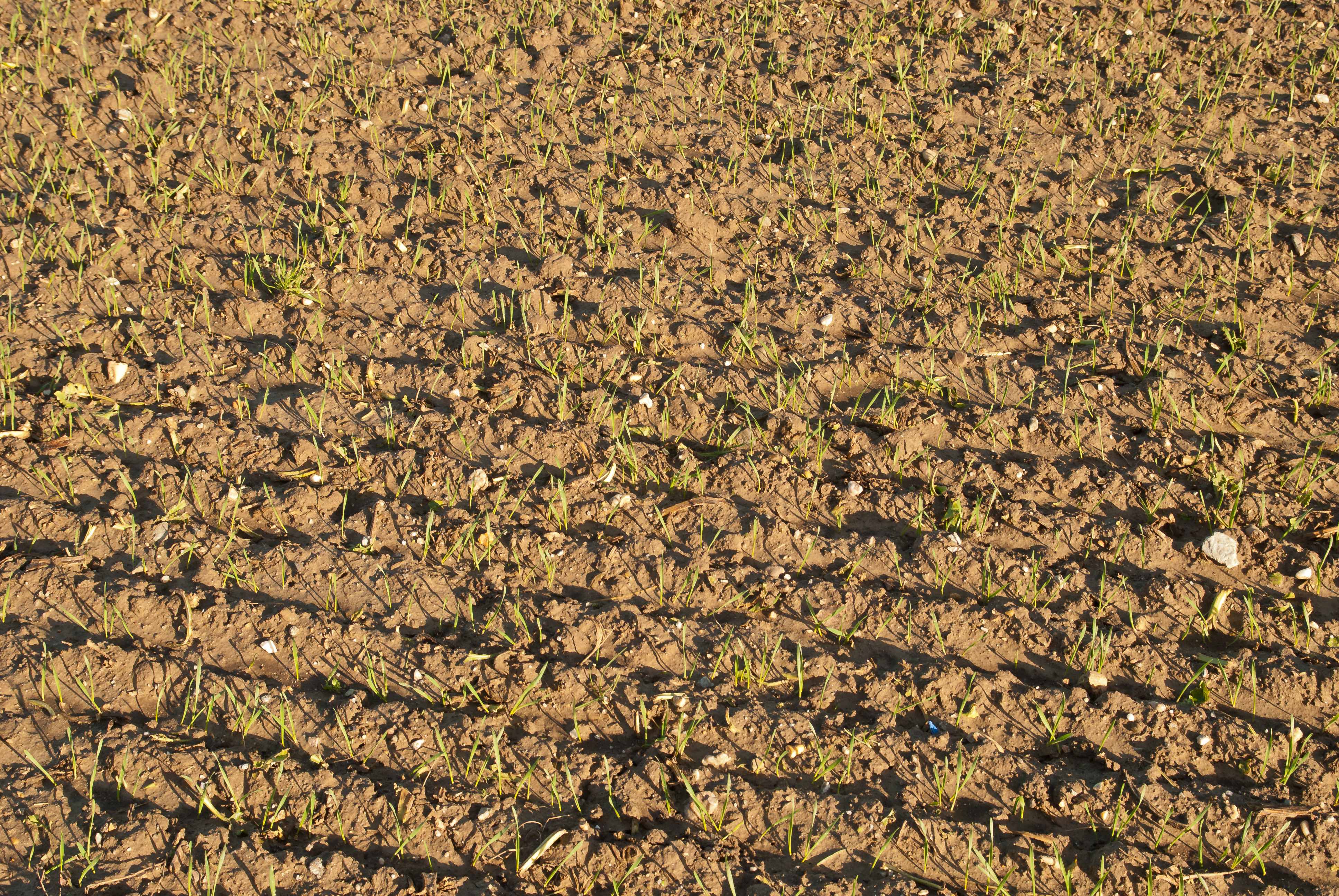
Termination Methods
Winter-Kill
Many cover crops — oats, tillage radish, buckwheat, most brassicas — terminate naturally when exposed to sustained sub-zero temperatures. This is the lowest-labour option and preserves soil structure entirely. The residue lies flat and decomposes rapidly in spring.
Crimping
A roller-crimper (a cylinder fitted with blunt chevron blades) rolls over standing cover crops, breaking stems without cutting them. The residue lies in a dense, flat mat that suppresses weeds mechanically while allowing direct seeding through it. Effective timing for crimping is when the cover crop is at anthesis (50% flowering for legumes, milk stage for cereals). Pre-anthesis crimping has much lower efficacy — plants re-grow from undamaged growing points.
Flail Mowing
Flail mowing chops residue finely and distributes it on the surface. It does not suppress weeds as effectively as crimping because it lacks the dense mat layer, but it decomposes faster and releases nutrients more rapidly — useful when the following cash crop has a short nitrogen demand window.
Tarping
Covering established cover crops with black silage tarp for three to four weeks terminates them through heat and light exclusion. Tarping is the primary no-till termination method for market garden scale where tractors are not available. It simultaneously warms soil, which can advance planting dates by two to three weeks in Canadian spring conditions.
Seeding into Cover Crop Residue
Seeding into untilled cover crop residue — the defining practice of no-till — requires either a no-till drill (for field scale) or a broadfork-and-dibble system (for market garden scale). Transplants placed through residue using a bulb planter or Johnny's row maker perform well when residue density does not exceed 4–5 tonnes dry matter per hectare. Denser residues slow soil warming and can create slug habitat in wet springs.
Direct-seeded crops with small seeds — carrots, lettuce, brassicas — face more challenges in heavy residue. Pulling the residue into furrows, seeding on the cleared strip, and returning residue as mulch between rows is a practical compromise that retains no-till surface protection while allowing reliable small-seed germination.
Integration with Compost and Biology
No-till and cover cropping reach their full potential when combined with biological inputs. Compost tea applications after cover crop termination inoculate the fresh residue surface with decomposers, accelerating nutrient release. Compost applied to the surface — never incorporated — adds organic matter without disturbing the soil food web. Over a five-year timeline in Ontario research plots, this combination raised soil organic matter from 2.1 to 4.3 percent, increased water-holding capacity by 18 percent, and reduced irrigation requirements in dry July periods by approximately one third.